
Frequently Asked Questions
Learn more about what we produce, how we care for our animals, how we farm, and how your order arrives.
Grass-Fed Beef
We believe grass-fed and finished beef is better for you, the environment and the cows.
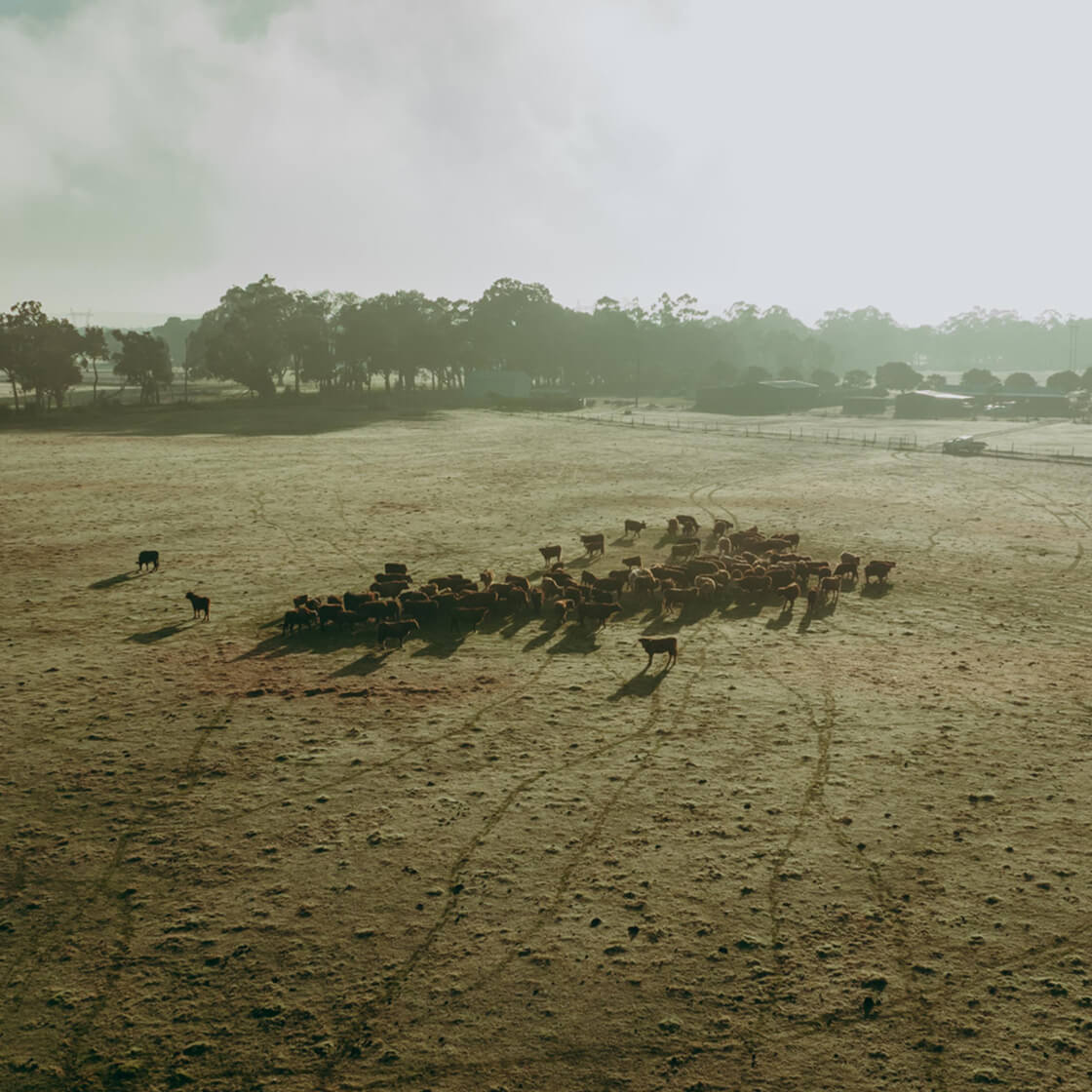
Better for you as it is a healthier option with lower calories, higher nutrients and no hormones or antibiotics; and it has more flavour.
Better for the environment as the cows graze pastures, and in doing so, help regenerate our lands, improve soils, reduce water consumption and demand for broadacre grain cropping.
Better for the cows as they roam and graze naturally, eating a variety of grasses as they are designed to do and they don’t require antibiotics to survive.
Grass Fed and Finished Beef
- Grass-finished beef comes from cows that have always grazed on pastures and hay and never fed grain.
- Grass-fed beef contains up to eight times more Omega-3s than grain-fed beef and has a healthy ratio of Omega-3 to Omega-6 fatty acids. This is critical for reducing inflammation and supporting heart and brain health.
- Grass -finished beef is rich in antioxidants and vitamins, containing more pro-vitamin A, vitamins E and B12, and other antioxidants that help reduce inflammation.
- Grass-fed cattle are raised without the use of artificial growth hormones or routine antibiotics.
- Grass-fed beef takes longer to mature and requires more land to grow, and is normally more expensive and varies with the seasons.
- Generally leaner and firmer with a stronger, earthier flavour and flavoursome fat (more beefy) it is preferred by beef lovers, the health-conscious and those concerned for animal welfare and the environment.
Grain-Fed Beef
- Grain-fed beef comes from cows that are raised on pastures before being moved to intensive feedlots where they are fattened on grains typically for 90 to 450 days.
- The complex gut of cows is designed to breakdown and extract nutrition from grasses so intervention with antibiotics and other inputs via the feed is required when feeding grains.
- Growth hormones and other stimulants are common to increase growth rates.
- The controlled feeding delivers rapid weight gain and uniform beef with more marbling, a softer texture and whiter fat.
- Grain-fed beef has a higher fat content, more Omega-6 fats and less nutrients.
- Key nutritional benefits associated with grass-finished beef are diminished by 50% within 30 days of grain feeding and are largely non-existent after 120 days.
- Cheaper to produce due to the stocking intensity of the feedlots and the high growth rates
- Due to its consistency, soft texture and affordability, grain-fed beef is preferred by supermarkets, many butchers, restaurants and pubs.
Yes. All Yangedi beef is both grass-fed and grass-finished, meaning our cattle are raised and completed entirely on pasture without grain.
Yes, the difference is easily appreciated. Grass-finished beef has a richer, more complex flavour, yellower fat and varies with the seasons. Food enthusiasts enjoy the strong umami taste, its readiness to brown and its depth of flavour.
Yearling cows are typically 14-18 months old and have not reached full-maturity. The beef is soft and mild and more closely resembles grain-fed beef, but is more healthy and flavoursome.
Aged beef is typically two to four years old and has reached maturity. When mature, cows begin to naturally store intra-muscular fat on grass and the muscles become stronger. The beef from these cows requires additional time in the cool-rooms to break down the connective tissues and the meat loses further moisture. The resultant beef is richer, more complex and has a firmer, drier texture. It is not tough, but does not melt in the mouth like grain-fed beef.
Regenerative Farming
We focus on:
- establishing pastures with a variety of grasses and forbs incorporating perennials
- no-till seeding for minimal soil disturbance
- keeping soils covered at all times by stock and grazing management
- maintaining living plants in the pastures for as long as possible
- rotationally grazing the cattle for healthy pastures and seed bank protection
- not using insecticides, herbicides or fungicides to manage pests and weeds
- improving water retention by creating more porous soil and slowing run-off
On the Lamont Farms, we have been following regenerative principles for over a decade and as new farms are added, the process begins again. It is not black and white, it is not linear nor overly fast, but it is rewarding and the more we do, the more we are convinced it is the right way to produce.
Yes, Lamont Farms are a member of Land To Market, the world’s first outcomes-based verified regenerative sourcing solution, and the Australian Holistic Management Cooperative, under which we have annual and five-year Ecological Outcome Verification monitoring audits.
We do not use chemicals to control pests or terminate grasses. Firebreaks are maintained mechanically, grazing practices and labour are used to maintain undesirable plant species, and insects and microbiology are preferenced over using insecticides to combat pests such as red-legged earth mite.
In many cases, we are able to maintain pastures without the use of synthetic fertilisers by bale loading, using composts and rotational grazing.
However, where individual paddock soil testing confirms critical minerals are lacking and are significantly restraining healthy plant growth, we do need to apply fertilisers at minimal rates specifically calculated to address the shortfall.
Once healthy pastures are established and strong nutrient cycling is occurring, the applications are reduced and/or removed entirely.
Meat Processing and Butcher Shop
Yes. By managing our own processing, we maintain full control over quality, traceability, and how our animals are handled from paddock to plate.
Yes, all our beef comes from our cows that have been processed on property in our fully-approved abattoir and butcher shop. Low volume, low stress and very high quality.
We do not purchase beef from other abattoirs or butcher shops.
Yes, the abattoir is fully approved and licenced, and all personnel are fully trained and authorised for their respective roles. Regular auditing is undertaken by the Western Australian Meat Industry Authority (WAMIA), the Department of Health and the Serpentine-Jarrahdale Shire to ensure compliance is maintained.
Our production capacity at Yangedi Beef is strictly limited to 500 tonnes per annum and we have no intent to approach that capacity. Where abattoirs typically process a cow per minute for maximum profit, we will only ever do 8 per day… and only one or two days per week.
A small, dedicated team of good people in no rush – on that day of all days, the cows are the number one priority.
All our beef is hung in cool rooms for a minimum of 7 days and up to 28 days pending the age and condition of the carcase. This serves several purposes – tenderising, concentrating flavour, relaxing the muscles and releasing excess moisture. The releasing of the moisture is critical for cooking and browning meat. Because our meat has been hung correctly, it browns and sears immediately it hits the pan.
Unfortunately in today’s modern fast-paced world the major meat processors and most butchers cannot afford to hang meat for the time required, and in most cases, it is broken down (cut into primals) within 48 hours. Most often it is delivered to butchers already in primals, and often already sliced for sale to customers, so the retained water simply does not have time to be released.
The supermarkets are stocking fully packaged meat on their shelves within 48 hours of slaughter.
Yes, because we function as a traditional old school butcher we can always cut to your requirements. And honestly, it brings a lot of enjoyment to do so and provide exactly what you are after.
This may mean we need a little extra time to ensure the carcases we have are not already assigned to other cuts but we can certainly do it.
Our butcher, Gavin is available to take the call or make the request online. Suggest leaving a number so Gav can discuss your request further.
Animal Welfare
We farm because we love animals. We choose to process our cows on property because it is the kindest way and the only way we can ensure their wellbeing is put first at every stage.
We do this by:
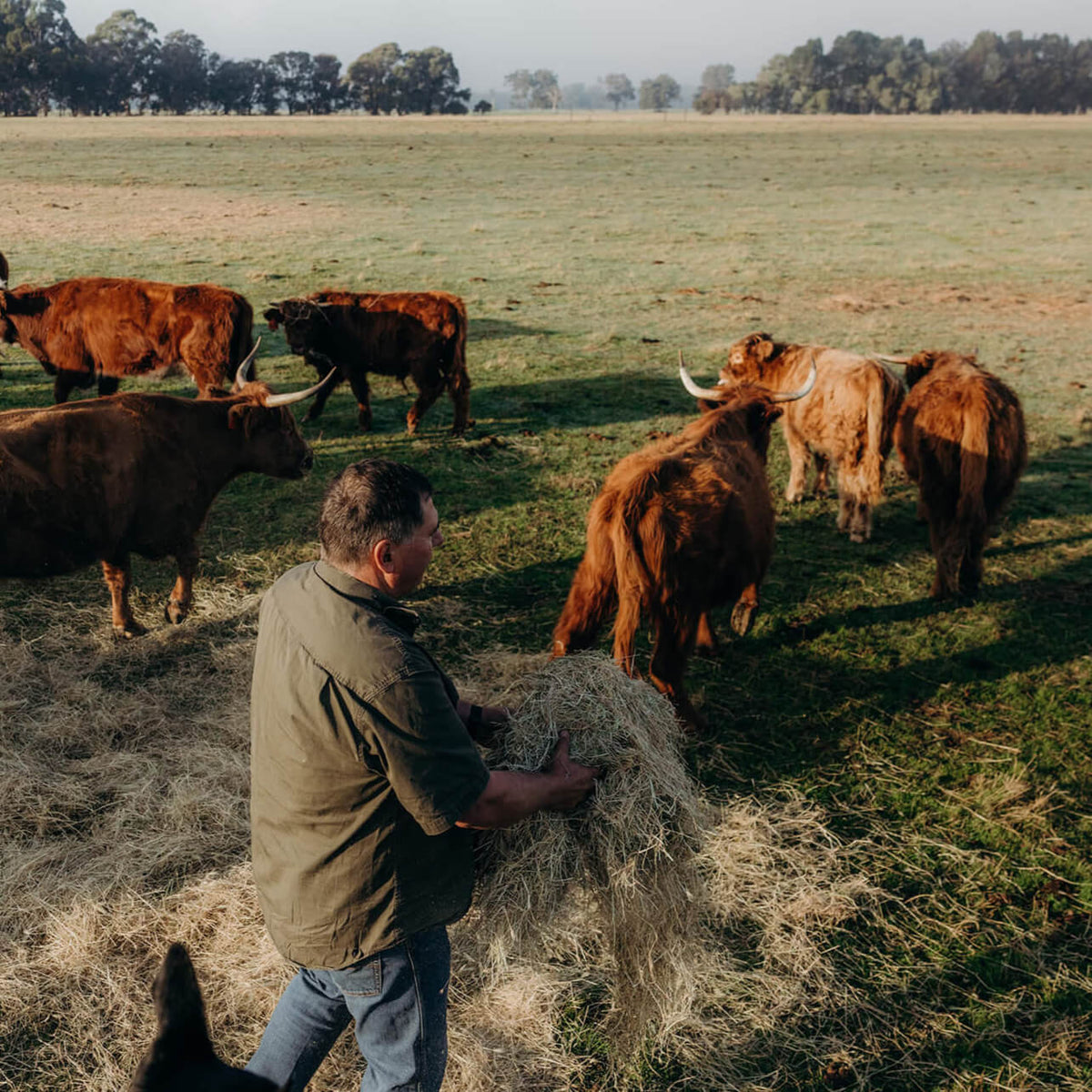
- farming regeneratively and feeding the cows on pasture and hay to protect their gut health
- handling them daily to build trust so they are comfortable with human interaction
- building yards that move the cows smoothly for low stress handling
- making the cows familiar with the yards near the processing area weeks before their final day
- allowing time for the cows to move the 10 metres to the processing room at their pace
- always putting the cow first on their last day
We do breed on property and currently have about 80 breeders. We breed both Highland and Angus. Unfortunately, we do not have enough land to be able to breed the required number of cows to make on-property processing viable. To bridge the gap, we buy young cows bred by local farmers to integrate into our farming practice and finish on our regenerative pastures. We work with farmers who share similar animal and farming philosophies, encourage them towards more regenerative practices and reward them by buying direct from farm at prices that respect the work they’ve done.
It makes sense to not breed on property. This would allow greater grazing periods on our pastures for the growing stock and more control of stock levels to protect pastures during hard seasons. However, breeding cows brings enormous joy (along with heartache at times) and it is hard to forego entirely.
Delivery
We currently deliver across selected areas of Western Australia. Enter your postcode at checkout to confirm availability.
Orders are vaccum sealed, packed in recyclable boxes and transported in refrigerated trucks to ensure meat remains fresh and cold during transport. No ice packs are included to reduce environmental waste.
If you are not going to be home at time of delivery, we recommend purchasing some frozen items to keep the produced chilled longer
Our packaging is designed to keep your order chilled for extended periods, even if you’re not home at the time of delivery.
No, as long as there is a safe place for the box to be left. We recommend refrigerating your order as soon as possible after delivery.
Fresh vacuum-sealed meat can last longer in the fridge than standard packaging. Check individual labels for best-before dates.
If something isn’t right, please contact us as soon as possible and we’ll work quickly to resolve it.
Product Handling
It’s completely normal for vacuum-sealed meat to look darker (sometimes a deep red or even purplish colour) when you first open the pack. This is due to the lack of oxygen during storage.
Once the packaging is opened and the meat is exposed to air, it will “bloom” back to a brighter red colour within a few minutes. This colour change is natural and does not affect the freshness, safety, or quality of the meat.
Yes. When you first open a vacuum-sealed pack, you may notice a slight odour. This is caused by the natural juices being enclosed without oxygen. The smell should dissipate within a few minutes once the meat is exposed to air. If it doesn’t, please contact us.
Yes. All products are suitable for freezing, and many items may already be delivered frozen to maintain quality.

